Some folks say Christmas gives them a headache. What if, however, the headache nearly kills you? Like me, you’d be glad to live in the United States and have access to high quality health care services.
Christmas Eve, 2012 – 6:45 AM. The alarm awoke me abruptly after a good night’s sleep. I felt relatively refreshed. As my feet met the floor that morning, I had no inkling that two weeks later, I would be waking up in St. Joseph’s Hospital, after spending 11 days in ICU, recovering from bleeding on the brain. Instead, I looked forward to a day of preparation for Christmas Eve and our grand family gathering the next day.
The morning had started as usual. I turned on the light to my fish tank so my two Tetras and the two ugly albino Catfish could wake up. I checked my cell phone and cleared emails – without reading them.
Moments later I sat with a mug of coffee and read parts of the newspaper. Back in the kitchen I made a breakfast of oatmeal, a banana, some strawberry yogurt, and green tea. My weight had gone up again – maybe 212 – but soon enough I knew I could take it down and continue my quest to 180.
Although we both usually got up around 6:30, Rosanne had been up very late the night before, and I felt glad she slept in. After all, this was Christmas Eve and we would be up late that night.
After breakfast, I fed the fish. As a fish-keeper, I failed miserably – mine died far too often. Then I went to the basement to do my treadmill work. This is the time I read the Wall Street Journal and various other news stories. Each morning I did at least 20 minutes on the treadmill.
We stored the heavy treadmill belt and motor mechanism in an upright position when not in use. I let the mechanism free and guided it to the floor, and stepped up onto the machine.
I had five-pound free weights sitting in holders on the treadmill, and I used them in various positions and combinations while I walked. I set a 3-mile per hour pace, and did some inclined walking during my work out.
Ready to go, I fired up the machine and started walking. My iPad sat in its convenient holder opened to the Wall Street Journal so I could read stories. I pushed the start button on the treadmill and the belt began moving.
At some point, a few minutes into my routine, I felt a sense of pressure rising up from the base of my neck, across the back and both sides of my head. I felt my ear canals tighten. This took perhaps 2-seconds. “What is this!” I thought.
Then the entire front of my head exploded in pain – the kind in which you might hope the front would blow off to bring relief. “What is happening?” I screamed silently. “This is not good. Something is wrong.”
I stepped onto the side rails of the treadmill, took several deep breaths, and expected all the pain to abate. It did not, but neither did it get worse.
Turning off my treadmill, I picked up the iPad, intending to head upstairs. First, I had to lift the track mechanism back into storage position. That’s when I discovered that every muscle and fiber in my neck and the back of my head radiated immense pain.
I carefully made my way upstairs, praying and thinking, “Lord God, what is happening to me?”
I felt certain everything would settle down if I just sat on the couch, took a few deep breaths and waited. I did not want to bother Rosanne unless I felt certain the condition would persist.
The cold sweats started. Okay, I knew this, along with the pounding in my head, qualified for an “unusual” condition of concern.
I believe it was now about 7:20 AM.
I called my Internist, Dr. Donald Gehrig on his cell phone. During the past year, he had transitioned into a “cash only” medical practice – meaning he did not honor any insurance and did not participate in the Medicare or Medicaid programs.
Although I had started on Medicare during September of 2012, I loved the fact that Dr. Gehrig and others like him, showed you the price of care at your first meeting. I knew that a 10-minute consultation would carry a $40 charge,[i] and even though Medicare and its supplemental coverages would pay any willing doctor $38 or so for this same consultation, I didn’t care. What I wanted when I called my doctor was quick access to a fine-minded, educated, passionate physician who could make recommendations based on science and experience, not on what an insurance company manager ordered.
Furthermore, I wanted to be able to spend a good chunk of time talking through my ailments. Most primary care physicians spend only a few minutes with a patient. Dr. Gehrig took whatever time I needed when I saw him in his office. He knew me.
Besides, Dr. Gehrig and I loved talking health care reform, politics, economics, and many other issues. I knew him as “Don,” one of my discussion buddies, and “Doctor,” when I had a medical need.
Leaving a message for Dr. Gehrig with a short description of what I was experiencing, I asked him to call back as soon as possible. Then I awakened Rosanne.
“Honey,” I said to the woman to whom I had been married more than 45 years,[ii] “I am having a problem.” Out of a sound sleep, this poor woman heard such a thing. “Something is going on in my head, and it’s not normal. It started while I was on the treadmill. I’ve left a call for Dr. Gehrig. I’m going to take a quick shower.”
I handed her the phone. “If he calls, you tell him I’m having a problem and will call him back.”
At this point, about 65% of my head screamed in pain. It felt good to have hot water hit my head after I got into the shower. Washing my hair hurt…badly.
I stepped out of the shower noticing my balance was off. I had to be careful to hold onto something while toweling off. After dressing, I called Dr. Gehrig again. He answered.
I told him what had happened on the treadmill and since then. He asked me two or three questions. “Is your wife nearby?” She sat on the sofa next to me.
“You go to the nearest emergency room. When you get there, you say, ‘I am possibly suffering a brain bleed and need a CAT-Scan.’ Now get going. You need to do this right away.” He did not want us to wait for an ambulance.
Rosanne dressed quickly and off we went to St. John’s Hospital in Maplewood, Minnesota. She dropped me at the walk-in Emergency Department door. I am thinking it is now 8:15 AM. I went directly to the triage nurse who was just finishing with two ladies.
“Hi,” I said, “My doctor said I am probably suffering a brain bleed and need a CT Scan right away.” The only thing she said to me was, “Sit down” in the wheelchair.
Moments later, I was in an exam room being prepped for the scan. Soon after, the doctor came in and said, “You have suffered a brain bleed. We are sending you to St. Joseph’s where they are better equipped to handle this case.”
The paramedics moved me to an ambulance, and off we went. I remember hearing the sirens and feeling the bumps in the road. They offloaded me and there I lay, in the St Joe’s Emergency Department.
Brain bleed? What’s that? I had no clue.
They moved me to the fifth floor, a ward containing 30 or so ICUs just for people like me, who had suffered some sort of brain thing.
My goodness. I can’t recall much from that first day, save to say I knew I had suffered some condition, and a team of people were getting ready to save my life.
On Tuesday, I learned that what had happened to me was very, very serious. Apparently, 85% of brain bleeds result in aneurysms, and 50% of those who suffer them do not make it to the hospital. Death, paralysis, and a host of related disorders are common.
When Dr. Eric Nussbaum, the neurologist, told me I was very, very lucky, it struck me: A brain bleed is an extremely dangerous problem that can take your life. God had spared me from the worst. The doctor asked if I would be a subject for a study of folks who survive the brain bleeds with little to no impairments, and I readily agreed.
“Do you know what I do for a living?” I asked him. “I write books on health care reform in the U.S.” And I write commentaries, like this one.
The diagnosis? Sub arachnoid hemorrhage. The prognosis? Little to no lasting effect (although my health record now says I suffered a stroke).
Later on, Dr. Gehrig stopped to see me. I said, “Dr. Gehrig, you saved my life today, or at least preserved a much higher quality of life.”
Isn’t this the purpose of a health care system? Our challenge is how can we be sure that there is a Dr. Gehrig and a Dr. Nussbaum readily available if yourbrain bleeds? I am convinced that letting government do it is not the answer – it is, instead, a prescription for death.
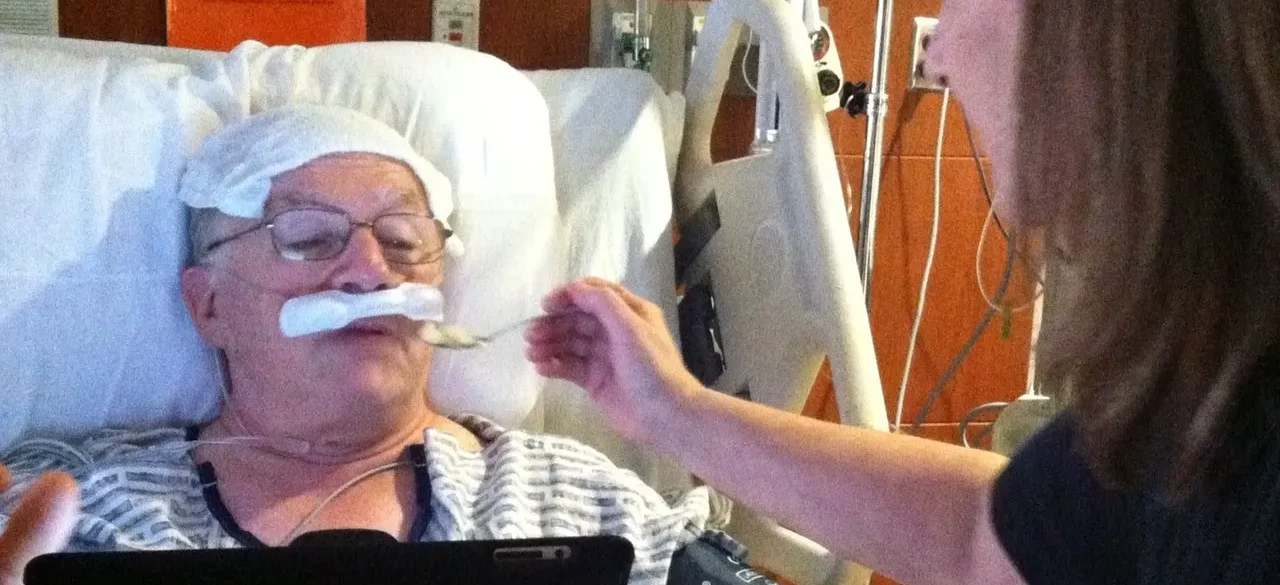
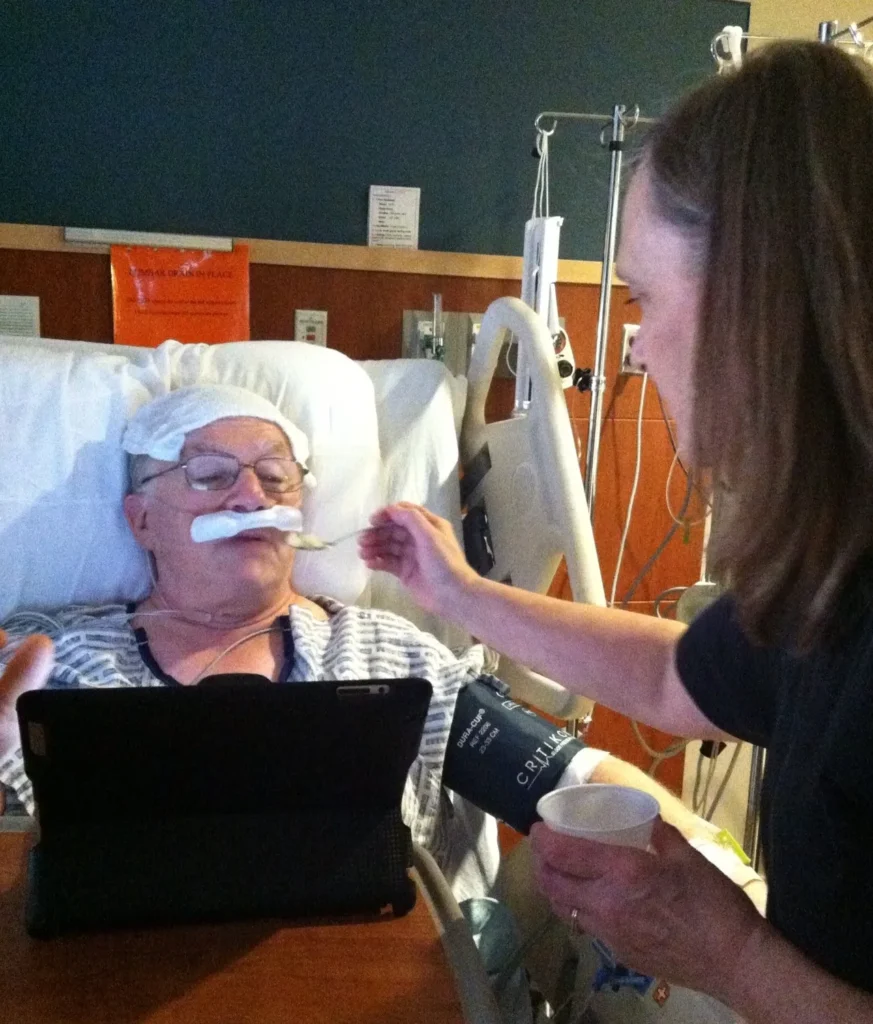
In all I spent 15 days in the hospital. Weeks later, I saw a photo of my wife feeding me while I lay in my hospital bed. “Why was mom feeding me?” I asked Dawn, one of my daughters. “Because you couldn’t feed yourself,” she said. She described drool running down my chin. I never knew it.
High quality doctors, well-prepared hospitals, support staff – a way to pay it all – and a strong, supportive family with faith in God. That is how to do health care.
[i] In 2021, this consultation might be $110.
[ii] Now more than 53 years.