By Dave Racer, MLitt
This is a “what if” piece.
If the U.S.A. Constitution’s meanings are subjected to the learned opinions of the Supreme Court of the United States (SCOTUS) and are not anchored in the meaning of the Constitution itself, then We the People live under tyranny. That is not the intention of our form of government.
If legal terms do not have meaning in the context in which they were written, then they may be widely interpreted in the context of the minds of the members of the nine justices on the SCOTUS.
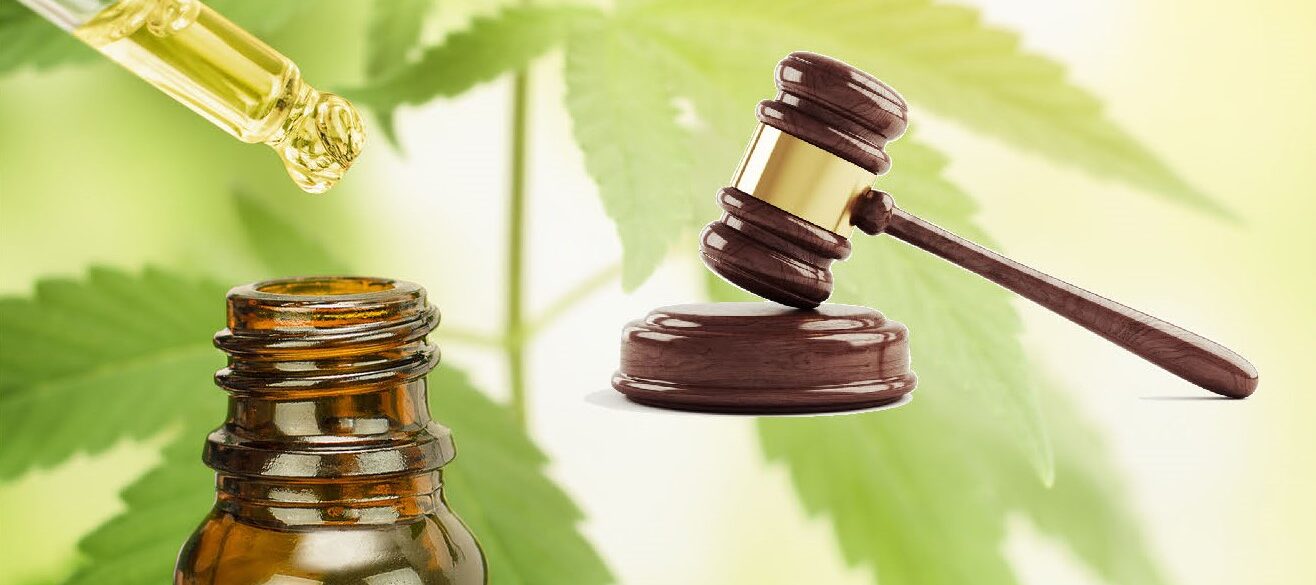
Think about this for a moment. SCOTUS kills CBD industry.
CBD oil is a big deal these days. Much of it if not most is sold through direct marketing, or in boutique stores. Few of those selling it are medically trained.
The Food and Drug Administration does not, at this time, directly regulate the sale of cannabidiol (CBD), but “…is committed to protecting the public health while also taking steps to improve the efficiency of regulation pathways for the lawful marketing of appropriate cannabis and cannabis-derived products, such as CBD…”[i]
Suppose professional groups, like the American Medical Association, filed lawsuits against CBD sellers and manufacturers, attempting to stop the sale of CBD claiming Congress intended it to be a controlled substance. Despite the fact that no such specific intent exists, the AMA could certainly do this. If the case is heard before a sympathetic federal judge, the AMA might even win. This puts tens of thousands of small businesses in scores of direct marketing companies on the defense – and a very expensive one at that.
With the right mix of Justices on the SCOTUS, justices who favor big institutions and frown on individual liberty and prosperity, could take on a case like this. Call it Racer v. Charlotte’s Web. Racer, representing the medical profession, claims he was harmed by CBD oil and the lack of medically-informed usage instructions he received from his distributor – a church-lady who lives down the road. Racer asks for $50 million, and had appeared on the way to victory, until the SCOTUS took the case.
Finally, SCOTUS issues its rulings. Unable to find any language in the Constitution that addresses this situation, SCOTUS turned to twisting the meaning of the 5th and 14th Amendments. In addition, SCOTUS appealed to the General Welfare Clause, and Commerce Clause. Ruling 7-2, SCOTUS upheld Racer and the AMA, and then wrote a regulatory finding to force the CBD industry to comply. Racer v. Charlotte became the new precedent. CBD distributors started selling soap to survive.
If you think such a scenario could never happen, think again. This very idea, that the SCOTUS can create rulings out of tortured interpretations of clauses and words never intended in their plain reading, and ignore the fact that Congress never authorized any action of this type – this is exactly what happened with Roe v. Wade.
In 1973, in Roe v. Wade, SCOTUS ruled that the Constitution protects a woman’s right to abortion, and then created a precedent without the standing of the meaning of words of the Constitution. It invented them based on the justices’ own philosophies and biases. It could not look to Congress because Congress had not passed relevant legislation. So it dug into emanations and penumbras of light which it somehow conjured up out of nothing.
What the 1973 SCOTUS did with Roe v. Wade, they and other lower courts have done repeatedly over time. The Courts created laws based on their rulings, whether explicitly in ordering certain actions or prohibiting others, or implicitly by making the threat of lawsuit too great so as to have a chilling effect on speech or actions.
Do not think that my example of Racer v. Charlotte is the utterance of a silly old man. On the contrary. Political factions have used the Courts and SCOTUS for decades to create rulings that have the effect of legislation. They do this when they cannot convince a legislature or Congress to do it the right way.
When legislators and Congress create laws, they do it after often vigorous debate that has the great advantage of citizen input. When the SCOTUS cerates laws out of their rulings, these are done in secret, in the back rooms and hallways of the United States Supreme Court Building in Washington, D.C. The people become subject to its dictates.
In June 2022, when SCOTUS ruled 5/4 to overturn Roe v. Wade, and Casey v. Planned Parenthood, it helped restore our Republic to the original intent of the Founders for the Court and handed back the political responsibility to create law to legislators and Congress.
We the People now have a chance to sway our local and national elected officials to make good law that is guided by the plain meaning of the words of our Constitution. In such a place, the CBD-sellers would not have to fear a SCOTUS shutting them down, but they would have to work like crazy to elect legislators who believed in a free marketplace for valuable, safe products.
[i] https://www.fda.gov/news-events/public-health-focus/fda-regulation-cannabis-and-cannabis-derived-products-including-cannabidiol-cbd