Do you hate false election campaign ads that lie about candidates?
Are you frustrated with the Trump and Biden campaigns—or for that matter, with all campaigns? Do you wish for civil politics that focusses on issues important to you? Well, as Saul Alinsky wrote in Rules for Radicals, that’s not how it’s done.
Hate Alinsky for it, but he taught that when you want a revolution, you start by assessing culture and politics as it is, not as you wish, and then you manipulate it to your advantage. Alinsky taught that the ends justify the means (that idea is repugnant to moral people, isn’t it?). If a lie is needed, then tell the lie, Alinsky taught.
If you think, as I once did, that political campaigns (at least the ones that matter) will play by the same moral rules as we do, it’s time to wipe the rose coloring off your glasses as I was forced to do in 1996. This is not to discourage you, but to educate you about election politics. And I want to dissuade you from practicing Alinsky’s strategies.
I much prefer campaigns that built on a Christian moral foundation. But for the most part, that’s not how it’s done.
Issues, Strategies or Tactics?
Do you think national elections have anything to do with issues? They do, but only in the same way that a new smartphone catches the wave of some new technological breakthrough. That is, issues matter to election engineers, but only in how they can be used to win elections – not because of some profoundly held belief.
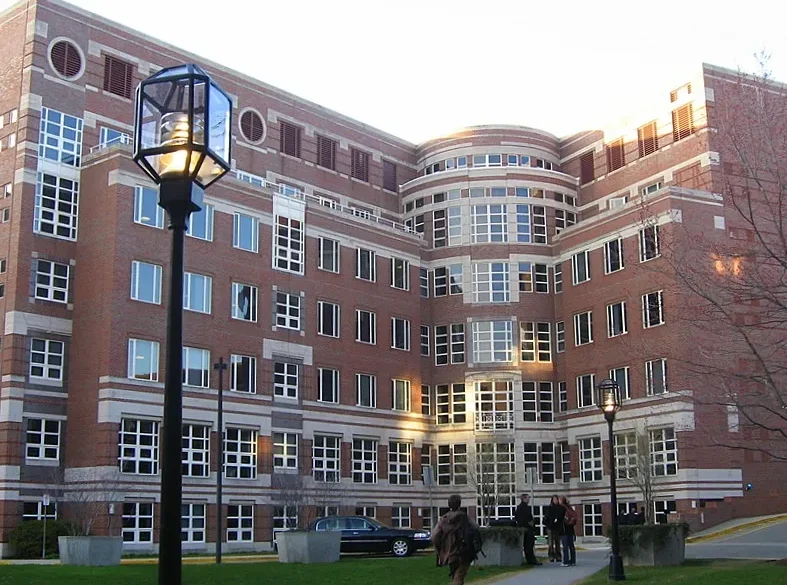
In December 1996, after the November Presidential election (Bill Clinton won his second term), national presidential campaign leaders gathered at Harvard’s Kennedy School of Government for a candid discussion about the 1996 presidential election. I represented the Alan Keyes campaign.[i] Each four years, the school hosts this sort of discussion. Harvard published the conference report in a book: Campaign for President: The Managers Look at ’96.[ii]
You would recognize many of the names of participants. These two: Rahm Emanuel, who eventually became Chief of Staff to President Obama and then Chicago’s Mayor, and George Stephanopoulos, who took leave of the Clintons to achieve fame and fortune on ABC as a “nonpartisan” news personality. But many others, including some of America’s most powerful political operatives and media personalities participated in the conference.
We sat together in a conference room at tables formed into a large, closed square, so we could all face each other. The Clinton team, headed by Campaign Manager Peter Knight, faced directly across the room at the Dole team, headed by Scott Reed. The rest of us, representing the losing presidential campaigns, were spread out around the tables. I’ve included below a list of the campaigns represented at the table.[iii]
A gallery of observers, made up mostly of national media personalities, witnessed the two-day event. Some moderated the various sessions – Al Hunt, Linda Wertheimer, Judy Woodruff, Tom Oliphant and Gwen Ifill are the ones I remember best. During their stint at the table, they asked questions of all of us designed to bring out the strategies our campaigns employed during our active campaign days.
Everyone in that room swore to keep the meetings’ comments confidential. The hosts allowed us to edit the conference report wherever it mentioned our names or campaigns—supposedly allowing for complete candidness. We agreed not to quote anything from the meeting that went beyond what the book reported. To a certain degree, I am about to violate my oath.
Many of us—especially the Keyes, Buchanan, Perot, and Forbes campaigns—had engaged in presidential politics because of issues that drove us to it. Keyes and moral values, especially the value of human life, formed the entire basis of the campaign. Buchanan meant foreign policy and human life. Perot’s campaigned about process. Forbes focused on economic issues. But all were issue-driven, and it turned out, very naive.
Rose Colors Fell off my Glasses
After each of us representing the losing campaigns had our say, our attention turned to the Clinton and Dole operatives. The two major candidate pollsters essentially became the focus of most of the key discussion: Tony Fabrizio (Dole Campaign) and Mark Penn (Clinton Campaign). This is when all the “rose colors fell off my glasses.”
Penn would point at a date and refer to the Clinton campaign’s decisions. Then he would ask Fabrizio what the Dole campaign saw at that time. Penn and Fabrizio, responding to moderator questions, would take turns, their dialogue dominating the discussion. The discussion turned to why the campaigns had made decisions as they did, based on their polling. Silly me (and many others in that room). We thought decisions were made primarily on how to advance our message, not to manipulate the message or the message of others.
Then came the bombshell question about false advertising. One pollster asked the other, “So that first week in June, you ran an ad about [Candidate X] that had patently false information in it. Do you remember that?”[iv]
“Yes, of course,” the other pollster responded.
“Yet even though you knew the ad was false, you continued to run it all week,” said pollster one.
“Yes. We decided that even though it was false, it would hurt our campaign more to pull the ad and admit it was wrong than to let it run,” pollster two answered, matter-of-factly.
As bad as this sounds, that truth didn’t matter, that only strategies designed to win votes matter, what followed next is what caused me to lose my naivety about national campaigns. Instead of shock and horror by the folks in the room, with two exceptions – Terry Jaffrey of the Buchanan team and me – everyone nodded, acknowledging the strategy as par for the course.
After this conference I wrote a long analysis and sent it to Alan Keyes. Paraphrasing, I said, “If we are ever to win these types of races, we have to become far better at campaigning than the others, because we don’t cheat.” Winning is everything, of course, but getting across the line by playing fair, it seemed, should matter to us as morally-driven people. Admittedly, this fact causes good people who run for office a lot of trouble.
But on the upside
Starting in 1978, I’ve come to know dozens of incredible politicians, and many actually have won elections, a few holding leadership positions. They have remained committed to family, faith and fealty to America’s highest values. This gives me hope.
Getting good people elected starts with finding the good people who are willing to do the hard work of campaigning. In my view—and yours may differ—I prefer people of faith so at least we have that in common, even if our views are different.
And here’s the good part. There are many elected officials on both sides of the aisle, who do serve and fear God and as a result, have been moved to serve mankind. Some become leaders.
I’m going to avoid names here—maybe I’ll write about some of them in the future—but take comfort in this. God has raised up individuals who have learned how to win elections and have remained faithful to Him while serving you. It is my hope that this can be more common going forward.
Today, however, I no longer see electoral politics with rose colored glasses—more like grey tinted.
[i] In 1996, I served as the National Campaign Manager for Alan Keyes for President.
[ii] The Institute of Politics. Campaign for President: The Managers Look at ’96. Boston: Harvard University Press, 1997.
[iii] Campaigns at the table: Alan Keyes, which I represented; Ross Perot and the Reform Party; Bill Clinton; Richard Lugar; Lamar Alexander; Pat Buchanan; Robert Dole; Pete Wilson; Morry Taylor; Phil Gramm; Richard Lamm. I’m fairly certain you may have forgotten some of these – I did, and I was there.
[iv] These are paraphrases.