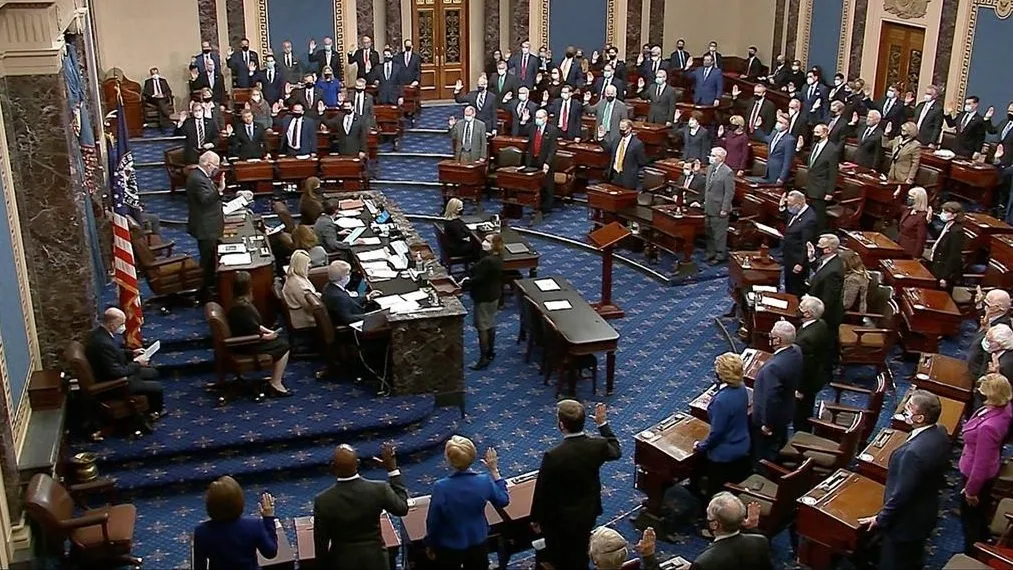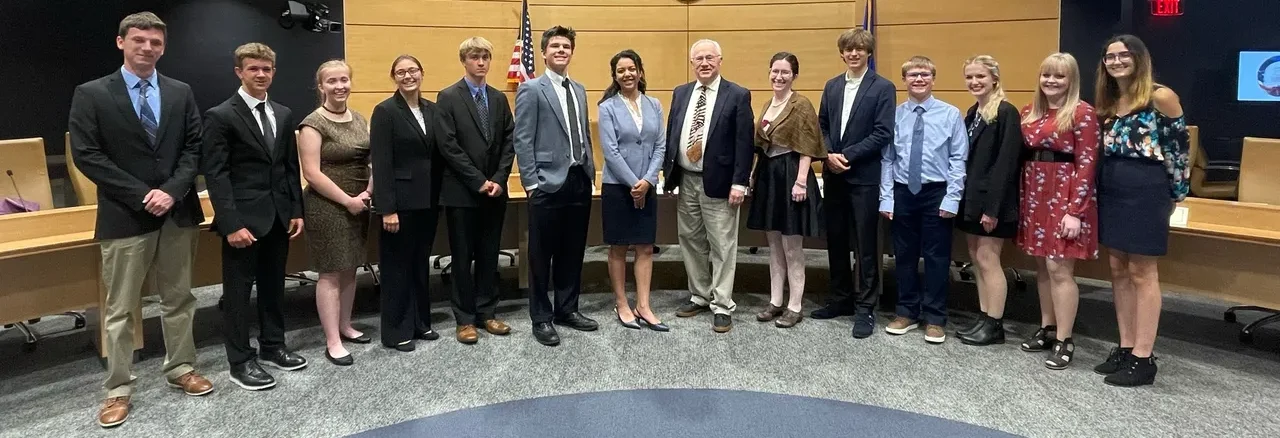
It’s April 25, 2022, the last minutes of the last day of the Twenty-first Session of Student Senate.
“Before we adjourn,” Student Senate President Colin Paschen said, “I have an announcement.”
Paschen walked to the podium where he stood in front of the 20 other Senators, their parents, friends, and me, and called Student Senator Layne Anderson to join him. He handed the gavel to Sen. Anderson, thus continuing a tradition 21 years in the making.
“Is there a motion to adjourn?” Anderson asked, in her capacity as incoming President for 2023. (The Senators always say “Nay” as they tease about keeping the session going.)
Twenty-one high schoolers enjoyed the ritual of the end of the 2022 Student Senate term. No one in the room enjoyed it more than me.
I invented Student Senate in 2001. I envisioned a place where high schoolers could learn the discipline of protocols and rules, take on really difficult subjects, and learn from the “testimony” of the most profound community leaders I could attract to them.
The 15-week semester program meets once a week for two hours. We pack those two hours with the business of choosing study topics, planning and strategizing how to study them, which witnesses to call, how to present findings. Then each Senator must write his or her bill, and stand before the Senate to attempt to persuade them to pass it.
It is understated to say I love what Student Senate does for my students – nearly 500 of them now. From timid, shy individuals unsure of how to take on tough topics of the day, like “Law Enforcement Reform,” “Immigration Reform,” or other issues like COVID regulations, election reform – to not only take them on but to get their arms around options. This fills my heart to overflowing.
Just weeks after rioters ransacked and burned a good deal of Minneapolis and St. Paul to the ground, the summer version of Student Senate took testimony from the President of the Minneapolis Police Federation, citizen groups fighting racism and violence, legislators, state officials – all who come to help my young people understand their world, and make a difference in it.
Imagine a 15-year old questioning the Minnesota Director of Infectious Disease about COVID during July 2020. That’s what happened. And one of the leading national physician skeptics who opposed this other state official.
Student Senate teaches critical thinking, oral and written communications, debate and persuasion skills, teamwork, and politics. It teaches more.
Young people grow up during the 15-weeks of our regular spring Student Senate session. Candid conversations controlled by rules, respect, and protocol forces them to think rationally before engaging their mouth or emotions.
I could certainly continue on about this. Suffice it to say, Student Senate has been a teacher’s dream course to create and then teach to young people. I want to do this all over the country now.
Who best can tell you about Student Senate than the Senators themselves. See it here.
If you are interested in starting a Student Senate in your community, go to https://studentsenatesaa.com and set up a time to talk. If you ever follow through, you can, like me, be amazed at what it does for young people – and how it offers hope for the United States of America.